For families who move regularly between the United States and East Africa, health headlines can feel personal. The latest Kenya Ebola update deserves attention, but it also deserves precision. A confirmed infection is not the same thing as uncontrolled spread, and an airport screening measure is not automatically a travel ban. Those distinctions matter for relatives planning visits, business owners coordinating travel, and readers trying to avoid both unnecessary fear and dangerous complacency. The most useful response begins with what health authorities actually reported.
Reuters reported on October 17 that Kenya confirmed four additional cases of the Bundibugyo strain, taking its recorded total to seven. Three of the new patients were health workers who cared for the first patient; another was his relative. All four were already in quarantine when symptoms appeared. The initial patient had arrived from Congo and later died. Kenya’s health ministry said most listed contacts had been traced and that there was no evidence of wider community transmission at the time of its statement. These are reported findings, not a prediction that further cases are impossible.
The story illustrates why contact tracing is central to outbreak control. Investigators seek people who may have been exposed, monitor them, and respond quickly if symptoms develop. Healthcare workers face particular exposure because providing care can involve close contact with sick people. Reuters also noted that no approved vaccine or treatment exists for the strain behind this outbreak. That detail makes professional infection prevention and access to timely care especially important. It does not mean every person who travels through Kenya faces the same level of risk.
Diaspora families often receive information through group chats before they see a health ministry bulletin. A message saying that several people were infected may omit whether those cases were detected in quarantine. Employers with East African colleagues, diaspora associations, and travel planners should communicate the date of their information and distinguish official advisories from personal interpretations. An advisory may change, but a social-media claim should not become a company policy without verification. For readers, the immediate question is not simply how many cases were counted; it is whether authorities can identify and interrupt chains of exposure.
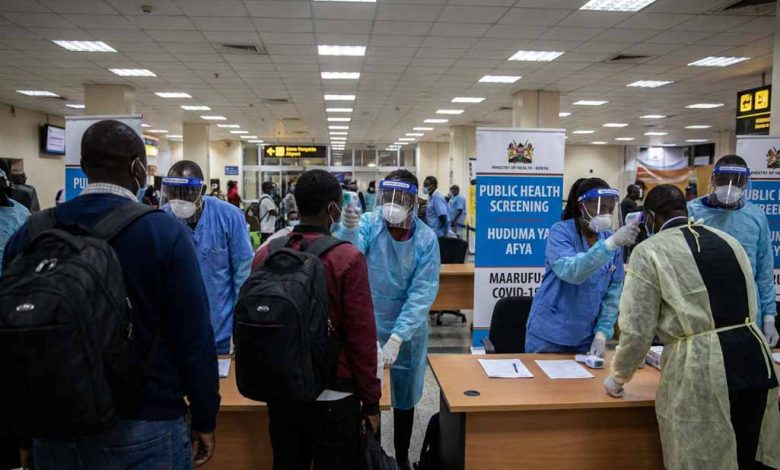
Before travel, consult the US Centers for Disease Control and Prevention and the destination health ministry for current guidance. Check airline requirements with the carrier rather than assuming a route has closed. If an official exposure notification applies to you, follow its instructions and contact an appropriate healthcare professional; do not rely on symptom lists alone to rule out infection. Community organizations can share links to translated public-health messages and explain where people should obtain assistance. Avoid posting photographs, names, or speculation about patients, whose privacy remains important.
The next indicators are new confirmed infections, contact-tracing coverage, healthcare-worker protections, and any formally announced border measures. Figures in a developing outbreak can change rapidly and may be revised as laboratories confirm results. Kenya’s announcement shows that infections linked to the initial case occurred, but the ministry’s stated absence of community spread should be reported alongside that fact. PalavaHut readers can follow our health and world coverage for verified context, while treating official medical notices as the source for decisions about their own care and travel.